
How Performing Arts Shape Confidence Beyond the Stage | KNA Journal
Confidence is rarely taught through lectures—it is cultivated through experience. In the performing arts, every rehearsal, every mistake, and every performance becomes a lesson in becoming more comfortable with oneself.
Karnika Dutta(KNA)
8/27/20262 min read


Performing arts do far more than teach choreography, rhythm, or expression. They nurture communication, emotional intelligence, discipline, and resilience—qualities that remain valuable long after a performance ends. Whether a student is five years old or fifty, the journey of learning dance often becomes a journey of discovering confidence.
Learning to Communicate Without Words
One of the greatest strengths of Indian classical dance is its ability to communicate complex emotions without spoken language. Through abhinaya, gesture, posture, rhythm, and expression, students learn how to convey joy, longing, devotion, courage, and countless other emotions with clarity and authenticity.
This practice naturally strengthens emotional awareness. Students become more observant, expressive, and comfortable sharing what they feel—not only as performers, but as individuals.
Discipline That Becomes a Life Skill
Progress in dance is built through repetition. A single movement may be practiced hundreds of times before it feels effortless, and that process teaches patience in a way few activities can.
Regular training develops:
Consistency and self-discipline
Focus and concentration
Respect for time and commitment
The resilience to learn from mistakes rather than fear them
These habits extend into academics, professional life, and personal growth, making dance an education beyond the studio.


Growing Through Community
Performing arts are deeply collaborative. Rehearsing with fellow dancers teaches teamwork, empathy, responsibility, and mutual respect. Students learn to celebrate each other's achievements, support one another through challenges, and understand the importance of collective effort.
Leadership often emerges naturally—not through authority, but through encouragement, reliability, and shared artistic purpose.
The KNA Approach
At Kalaa Nritya Abhivyakti (KNA), confidence is viewed as an outcome of meaningful artistic education rather than a separate goal. Through structured training in Indian classical dance, cultural understanding, rehearsals, workshops and regular performance opportunities, students are encouraged to develop both technical excellence and personal expression.
KNA believes that every learner possesses a unique artistic voice. By nurturing individuality while remaining rooted in tradition, the institution creates an environment where students grow into expressive, disciplined, and culturally aware individuals.
Because the true purpose of performing arts is not simply to create better performers—it is to help shape more confident human beings.
From Stage Fright to Self-Belief
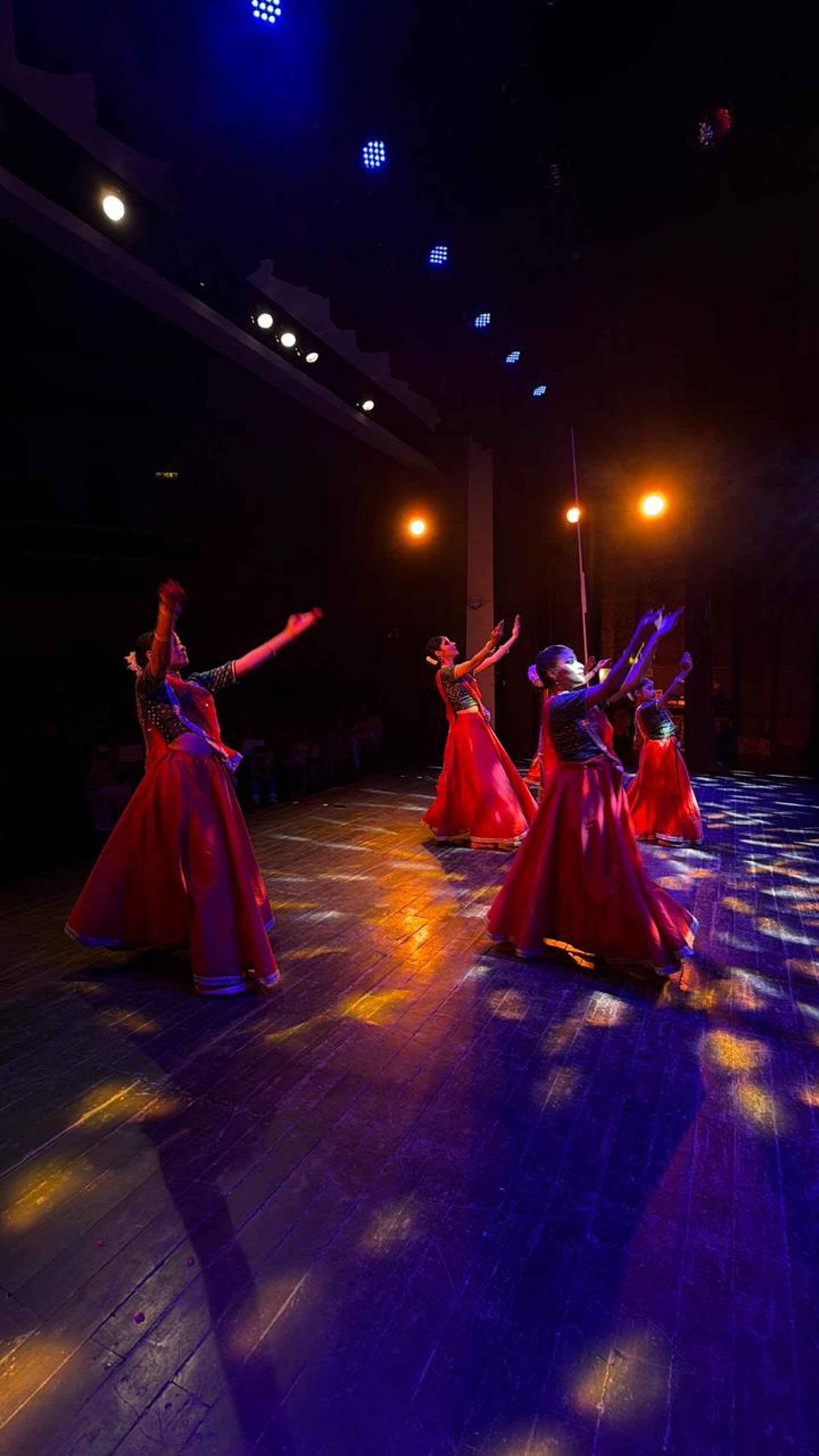
Standing before an audience can feel intimidating at first. Yet performance gradually transforms hesitation into confidence. Students learn to manage nervousness , stay present under pressure, and carry themselves with composure.
Over time, many discover that the fear of being watched begins to fade. Public speaking becomes easier, presentations feel less overwhelming, and expressing ideas in front of others becomes more natural. The stage becomes a training ground for everyday confidence.