
The Emergence of Indian Performing Arts: Understanding the Natyashastra
Before dance became a performance, it was a philosophy. Before it became choreography, it became a language.
Karnika Dutta (KNA)
8/31/20264 min read


The Divine Origin of Performing Arts
According to Indian tradition, the performing arts were conceived by Brahma, the creator of the universe. It is believed that he drew the essence of knowledge from the four Vedas to create a new scripture that could be understood by all people, regardless of caste or education.
This became the Natyaveda, often called the Fifth Veda.
Its elements were drawn from
Veda Contribution to Natyaveda
Rigveda Speech and dialogue
Yajurveda Gesture and mime
Samaveda Music and melody
Atharvaveda Emotion (Rasa)
The purpose of the Natyaveda was remarkable—it made philosophy, ethics, history, and human emotion accessible through performance. Dance, music, and drama became living forms of education as much as artistic practice.


The Four Cultural Regions of Dance
In the 14th chapter of the Natyashastra, Pravritti Vidhan, Bharata Muni divides the Indian subcontinent into four cultural regions, each associated with distinct artistic traditions.


Dance has always been deeply intertwined with human civilization. It reflects the values, beliefs, rituals, and aesthetics of the societies that nurture it. In India, the performing arts evolved not merely as entertainment, but as a profound medium of devotion, storytelling, celebration, and spiritual inquiry.
To understand Indian classical dance, one must begin with one of its most influential foundations—the Natyashastra, the ancient treatise that continues to shape the vocabulary of Indian performing arts even today.
The Natyashastra, traditionally attributed to Bharata Muni, is regarded as one of the most comprehensive treatises on dramaturgy, dance, and performance in the world. Rather than documenting individual dance styles, it establishes the universal principles of movement, expression, rhythm, music, stagecraft, costume, and aesthetics.
For this reason, it is often described as the encyclopaedia of Indian performing arts.
Interestingly, Bharata Muni never directly names the classical dance forms we know today. Instead, he provides a framework—a shared artistic grammar—from which regional traditions would later flourish


Dakshinatya :
Bharatanatyam, Mohiniyattam, Kathakali, and several southern traditions trace their aesthetic roots to this region.


Avanti :
Representing the artistic practices of central India, Avanti reflects a rich confluence of regional performance traditions.


Panchali :
Associated with the northern region, this tradition later influences forms that develop across North India, including Kathak's cultural landscape.


Oudramagadhi :
This regional classification demonstrates that Indian classical dance was never a single homogeneous practice. Instead, it grew through diverse cultures while remaining connected by a common philosophical and aesthetic framework.
From this eastern region emerge traditions such as Odissi, Gaudiya Nritya, Sattriya, and Manipuri, each preserving unique regional identities while sharing classical foundations.


From a dancer's perspective, the Natyashastra is far more than a historical document. It teaches that movement becomes meaningful only when it communicates emotion.
Every element carries intention:
Drishti (the gaze) directs attention and emotion.
Hasta Mudras give symbolic meaning to the hands.
Angika refines the body's movement.
Rasa allows audiences to experience emotion rather than simply observe it.
These principles continue to provide classical dancers with a shared artistic vocabulary. While choreography evolves across generations, the philosophical essence of expression remains timeless.
How KNA Brings the Natyashastra to Life
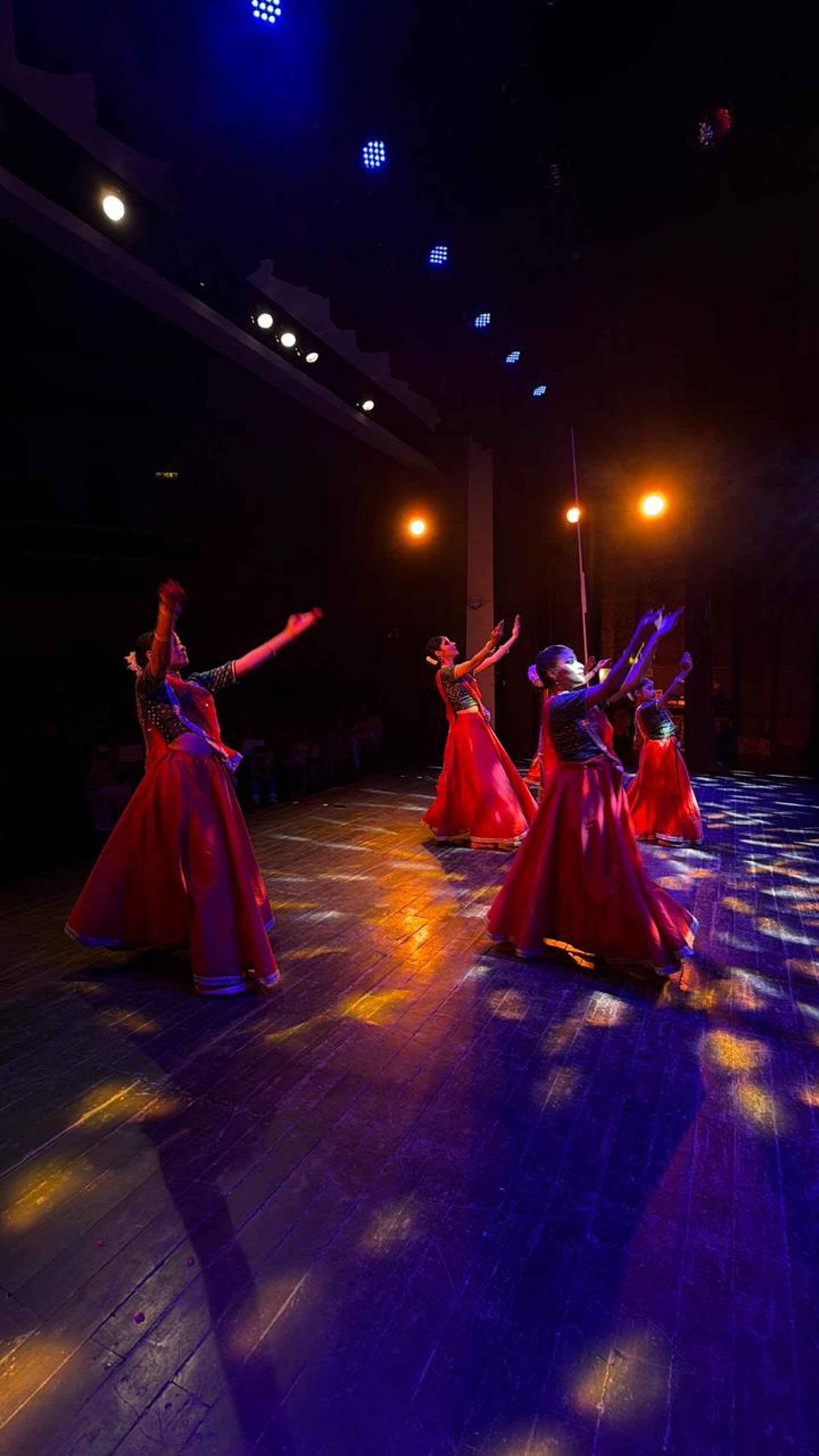
At Kalaa Nritya Abhivyakti (KNA), classical dance is taught as both practice and understanding. Technical training is accompanied by conversations around history, aesthetics, literature, rhythm, and the cultural significance of movement.
Students engage with the ideas of the Natyashastra through:
Structured classical dance training
Repertory and choreography
Guided rehearsals and stage performance
Learning the cultural context behind compositions
Rather than treating the Natyashastra as theory alone, KNA encourages learners to embody its principles through disciplined artistic practice.
Preserving a Living Tradition
The strength of Indian performing arts lies in their continuity. Traditions survive not because they remain unchanged, but because every generation studies, practices, questions, and reinterprets them with respect.
By nurturing informed performers and engaged audiences, Kalaa Nritya Abhivyakti contributes to safeguarding this living heritage. The wisdom of the Natyashastra continues to inspire movement, storytelling, and cultural connection—reminding us that dance is not simply performed.
It is lived.